
Norroa Approved: Treatment Targets Reproduction, Not Destruction
It's too soon for any of us to have experience that may back up the promise, but the September 25 US EPA registration of Norroa, a feed-based Varroa mite treatment, represents a whole new mode of action in the fight against the mite: birth control. Over the summer we have also gotten access to new formulations and new delivery methods for existing treatments, like oxalic acid and amitraz. Norroa's very different strategy, while not cheap ($20+ per brood box), may pair with other approaches to finally give us a bit more speed in the genetic arms race against this existential threat to colonies. Norroa has been registered for use in Maryland. [More info]
Organic colony management practices are profitable for backyard beekeepers

The all-star Penn State organic beekeeping research team led by Robyn Underwood has recently demonstrated that there are approaches organic beekeeping that are economically viable/sustainable for beekeepers like us.
The team took a look at the impact of three honey bee colony management systems–chemical-free, conventional, and organic– on the profitability of small stationary honey-and-bee-producing beekeeping operations. Over the three years of the study, they found that the operations using the chemical-free management system had economic losses, while the operations using the conventional or organic management system generated revenue.
"Honey production and bee production were highest in the organic and conventional management systems resulting in profits that were 14 and 11 times higher than in the chemical-free management system." [More info]
Yellow Legged Hornet Lifecycle Graphic and Identification Resource
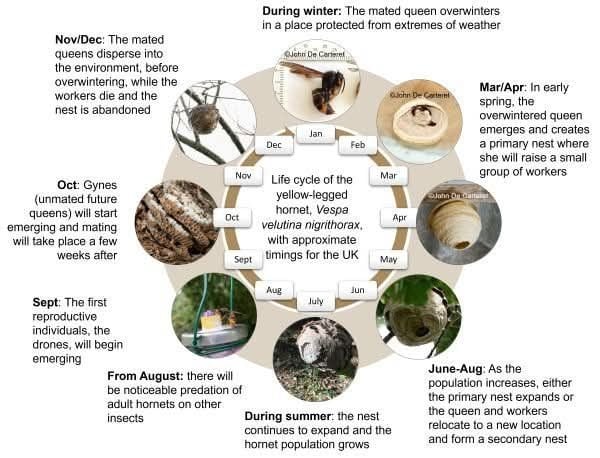
The United Kingdom first saw Yellow Legged Hornets (Vespa velutina) in 2016, and has been fiercely fighting a consistent incursion since 2023, enlisting beekeepers in the fight. MidAtlantic beekeepers might want to study up before such a fight comes to us. Recently, the UK National Bee Unit released a lifecycle graphic that includes seasonal timings that might not map to ours, but nonetheless provide another teaching graphic you can store next to the ones for Varroa and Small Hive Beetle or (yikes) Tropilaelaps. [More info]
Study Evaluates Honey Bee Dominance in Urban Settings
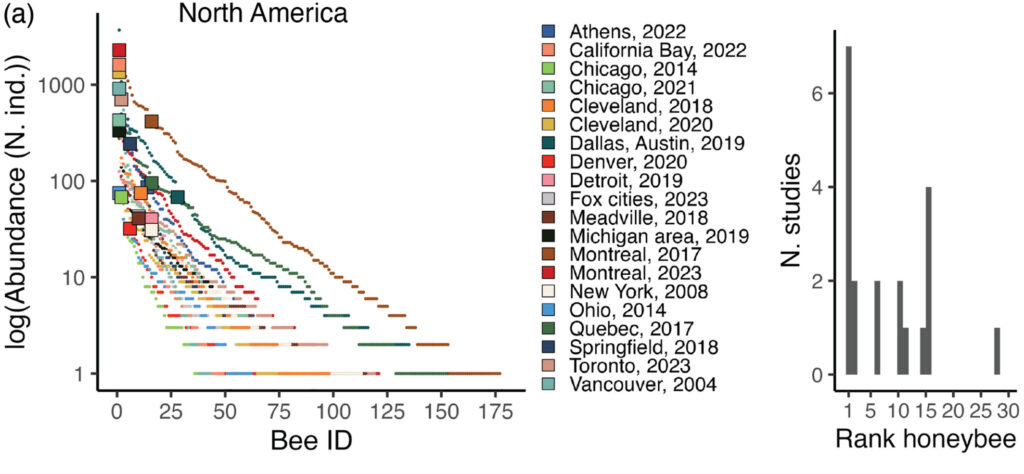
North American graph
An August 2025 systematic review of data from 46 cities in 15 countries and five continents has found Apis mellifera to be the most dominant bee species in approximately 70% of cases. The team, led by Joan Casanelles-Abella of the Technical University of Munich, found honeybee abundance patterns consistent across regions and sampling designs, but the degree of dominance varied across cities. The team suggests context-dependent limitations on managed honey bees and better pollinator and floral diversity measurement. [More info]
Land Use/Seasons Interact to Honey Bee Size and Fat Stores: City Bees are Fatter!
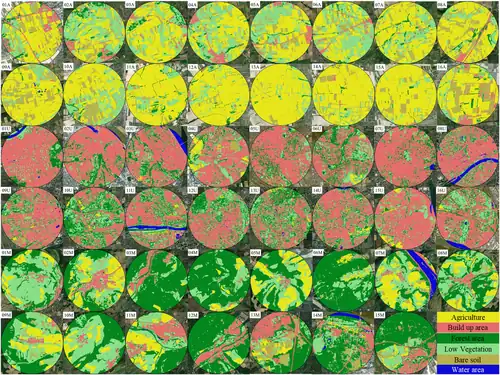
A research team led by Yongqiang Wu of Chinese Academy of Agricultural Sciencesand the Johannes Gutenberg University found that land use and seasons interact to change the bodies of honey bees in Central Europe. Fragmentation and dispersal of forage areas are known to create stress, especially at midSummer, but urban bees appeared to be sheltered from these effects. While rural bees were larger, urban bees carried larger fat stores. [More info]
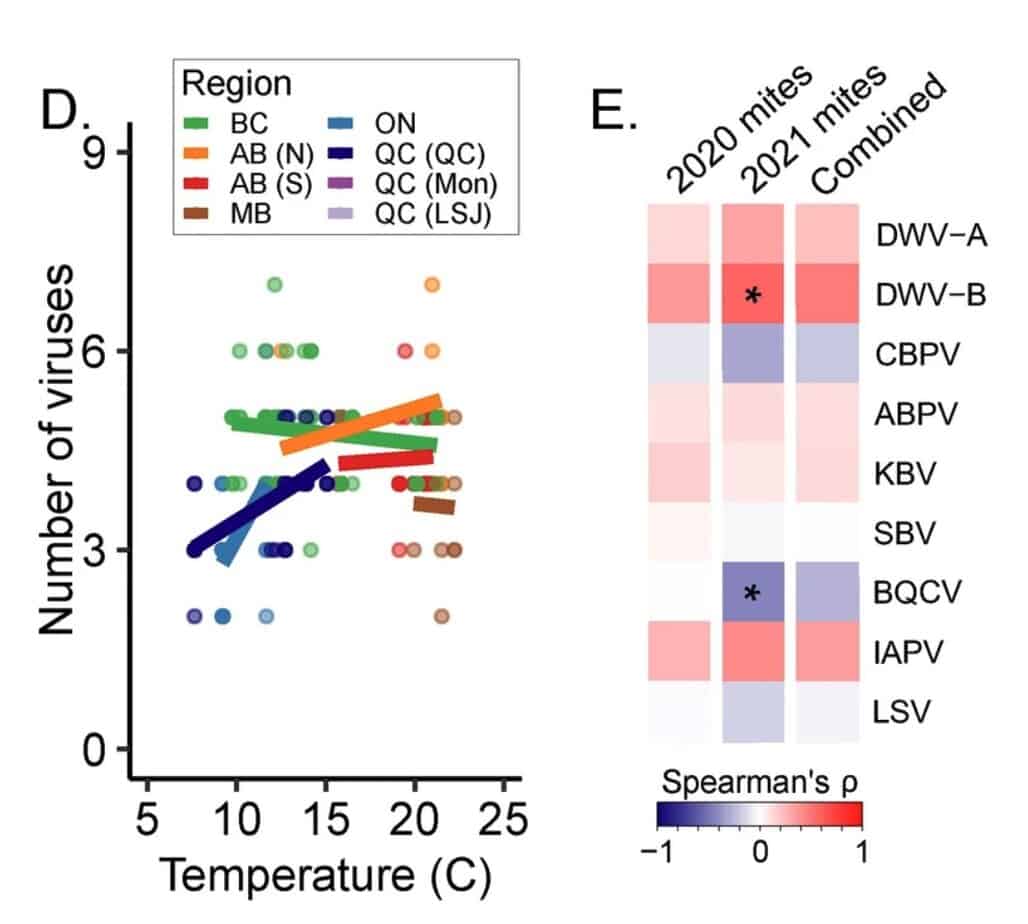
Canadian Team Finds Climate a Better Predictor of Viral Intensity than Varroa
Canadian researchers led by Alison McAfee, Niloofar Alavi-Shoushtari,
and Renata Labuschagne looked at prevalence data for DWV A&B, sacbrood, BQCV and six other viruses across Canada seeking trend insights across regions and years. Temperature was a significant positive predictor of the total number of viruses per sample. Surprisingly, including Varroa abundance as a covariate did not significantly improve model fit. Although climatic effects were often inconsistent among individual viruses, the study shows that climatic variables can be better predictors of virus intensity and occurrence than Varroamite abundance, at least when infestation rates are low. [More info]
Using Honey Bees to Design Electric Grids

Science has a rich history of turning to honeybees to create biomimetic systems capable of solving problems... from computer server apportionment to honeycomb inspired advanced materials design. But what do honey bees and electric power grids have in common?
More than you might think, according to Wangda Zuo, professor of architectural engineering at Penn State. Zuo is leading a new project funded by a $1 million award from the U.S. National Science Foundation (NSF) to investigate how coordinating and controlling distributed energy resources — similar to how honey bees regulate their colony’s resources — may help improve the distribution resiliency of electric grids. His research project is scheduled to run from October 2025 to September 2028. [More info]
[Return to November 2025 BeeLine newsletter]